

How Sweet it Is
What James Taylor’s openness about addiction and recovery can teach us about stigma, silence, and healing.


It is incredibly healthy and helpful when people are open about their struggles with addiction.
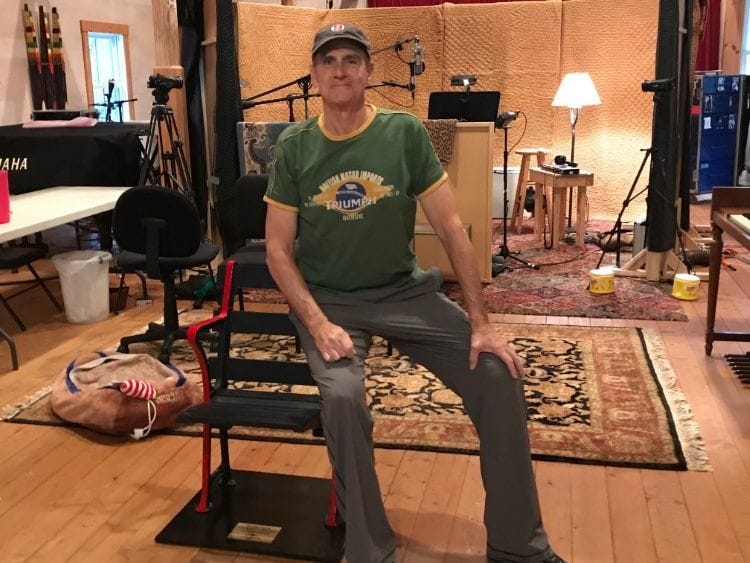
I was celebrating July 4th at an outdoor concert in Western Massachusetts, featuring iconic singer and songwriter James Taylor. I was shocked when he opened the show by discussing his fight to overcome addiction and his gratitude for being in recovery. It was an amazingly sincere and heartfelt moment. He has struggled with addiction to heroin as well as to other drugs. The first songs he played were about these struggles, including “That’s Why I’m Here” which is explicitly about survival, recovery, and paying tribute to those who don’t make it. He mentioned that this song was specifically written after the overdose death of his close friend John Belushi.
John’s gone found dead
He dies high he’s brown bread
Later said to have drowned in his bed
After the laughter
The wave of the dread
It hits us like a ton of lead
Why was I shocked by his openness? Because, sadly, so few people feel able to discuss their addictions in public. Especially not in front of eighteen thousand strangers. At best, what most people can muster is the courage to speak up in a secluded Alcoholics Anonymous meeting, in a basement of a church somewhere. Most people don’t feel as if they can speak up at all.
Why this silence? What effect does it have? How can we move past it?
If addiction is so common, why the silence?
Addiction is incredibly prevalent in our society. It is estimated that in 2015, 20.8 million Americans met criteria for a substance use disorder within the prior year. Given how common this problem is, one might think addiction would be readily accepted as a common and treatable disease (which it is). All one would have to do in order to get support is to admit one’s problem and ask for help. Right?
Unfortunately, drug and alcohol disorders, along with other mental health disorders such as depression, and bipolar disorder, are among the most stigmatized of all maladies. Many people view substance use disorders through a lens of stigma, which comes from the mistaken notion that people “choose” and enjoy this lifestyle. Nothing could be further from the truth.
Compounding this misunderstanding of addiction is the fact that we criminalize drug use, with our cruel and pointless War on Drugs, which further cements the notion that there is something fundamentally wrong with people who are using drugs.
This stigma that is leveled at people suffering from addiction can become internalized. People can give up hope as a result, people afflicted with addiction and alcoholism generally tend to suffer in the shadows, to keep their misery secret, and to refrain from asking for help, often until it is too late to right the course of their broken lives. They fear being looked down on, being despised, and being judged as having “bad moral character,” and for having deliberately chosen this unforgiving disease. They also can legitimately get discriminated against, if they are labeled as an “addict”. This can negatively impact how they are treated in the workplace, in court, if custody issues arise, and, sadly, in the doctor’s office as well.
Reasons to go public
So, why did I go public with my story about becoming addicted to prescription opiates? Instead of hiding in the shadows, I decided to write a memoir.
To start, I came to believe that being open and honest about my struggles would increase my ultimate chances of success. There is far more to recovery from addiction than merely not taking drugs. A complex, interrelated process of personal growth and neurochemical healing, often with effective medications, has to occur. Much of the personal growth side of things boils down to the saying “secrets make you sick.” As a corollary, openness and honesty are what allow you to heal.
I don’t know that there’s much in life that is more difficult than overcoming an opioid addiction. But I thought that if my entire social network knew about my struggles, they would be there to support me. They would notice if I needed help long before the wrong neurons start firing, and the drugs started to reenter the picture. I would be safer. People can’t help if they don’t know that anything is wrong.
Secondly, as a practical matter, like Huck Finn trying to remember which yarn he told to which person, it was just easier for me for everyone to know about my addiction, than (for example) to continue coming up with reasons why I wasn’t working (I lost my medical license for several years…) or why I didn’t drink alcohol. For a period of five years, I wasn’t allowed to consume alcohol in order to pass the drug tests to regain my medical license. This was no hardship, as I was never a big fan of alcohol. But what was a hardship was always coming up with a reason why I didn’t drink, as if this somehow threatened or imposed on the rights or enjoyment of whoever was offering me a drink. I realized that it was easier to just say, “I’m in recovery,” and I’d usually get an awkward “congrats” as a response instead of the endlessly annoying “are you sure you don’t want a beer?”
(There are so many reasons why people might choose to not drink alcohol: alcoholism, medical problems, religious convictions, or just not liking it — why make them explain themselves? It is their business, and one might consider simply offering a nonalcoholic beverage and moving on to the next topic of conversation, without an insensitive interrogation of why they don’t imbibe.)
Finally, I was becoming increasingly intolerant of the blatant discrimination and hatred directed at those struggling with addiction. Contrary to popular wisdom, we are people too. Not only that, but we have a lot to teach the rest of society, as we recover, knowledge forged out of struggle and remorse (and therapy). We know about humility and compassion. We know how to overcome adversity. We know how to ask for help, and how to provide it to others.
Addiction memoirs are crucial windows into the lives of those who have fought and overcome this scourge. I thought that with my memoir Free Refills, I could make a statement against stigma, by confronting head-on the taboo subject of physicians and addiction. I wanted to demonstrate that anyone can get addicted, even (or especially) your well-meaning doctor. I also wanted to show that anyone, provided they have some ability to grow and change, and that they are afforded the treatment they deserve, has a good shot at recovery.
There’s nothing inherently wrong with people who are addicted except the addiction, which is treatable. There is no character flaw. There is no moral vacuum. The only appropriate responses to someone struggling with addiction are compassion, solidarity, and support.
Most importantly, if someone you love is struggling with addiction, no matter how annoying or frustrating, or even threatening, their behavior is, don’t give up on them. Instead of helping them heal, you might deprive them of a life-saving connection. You literally might never see them again.
As more people speak publicly about their addictions, stigma starts to evaporate. People come to understand that addiction is about people with trauma, or mental health issues, or really, really bad luck, who need treatment and understanding, not scorn or derision. Most people have, or know, someone in their lives who has struggled with addiction. Addiction can affect anyone. As more of us speak up, and find commonalities in our experiences, and start to learn from each other, we are more able to ask for help without being judged or shamed. With openness and acceptance, we can help alleviate the unnecessary suffering of millions. We all heal together.
The "enablers" have their regrets, also! I went to great lengths to help a guy with AUD, only to become a victim of domestic violence. What I learned is that TREATMENT is needed by addiction medicine specialists, not just a well-meaning girlfriend.